
Clinical trial for early-stage non-small cell lung cancer
A Phase 3 randomized double-blind study of adjuvant pembrolizumab with or without V940 in participants with resectable Stage II to IIIB (N 2) non-small cell lung cancer who are not achieving pCR after receiving neoadjuvant pembolizumab with platinum-based doublet chemotherapy (INTerpath-009).
A New Approach: Individualized Neoantigen Therapy

The treatment of early stage of cancer (stage II, IIIa and IIIb) depends on where the tumor is located, the overall health of the patient and if the tumor can be resected (i.e. removed) with surgery. Your doctor will assess all factors to determine the best treatment. One option for tumors that are resectable is now available at ECHO is a clinical trial using individualized neoantigen therapy (INT) in addition to the standard therapy of neoadjuvant and adjuvant chemotherapy/immunotherapy.
This new approach uses a persons’ own cells to create a treatment that can help their body’s natural defense (immune system).
Treating non-small cell lung cancer (NSCLC)
The definitive approach to treat early non-small cell lung cancer (NSCLC) is surgery. Neoadjuvant treatment for early-stage NSCLC is frequently used prior to surgery to potentially improve surgical outcomes and overall survival. Neoadjuvant therapy involves administering systemic therapy (chemotherapy/immunotherapy) before surgery to shrink the tumor. There are many factors that determine which chemotherapy is used.
In this clinical trial protocol, the specific chemotherapy is determined by the histology of the cancer. The immune therapy is pembrolizumab. After surgery, adjuvant therapy with immunotherapy is continued. This protocol is investigating if adding individualized neoantigen therapy will prevent recurrence of NSCLC and improve overall survival.
Stimulating the Immune System to Fight the Patient’s Tumor
The investigational agent in this study is V940 (mRNA-4157). This is Individualized Neoantigen Therapy (INT) designed to stimulate the immune system to target specific mutations found in a patient’s tumor. The idea behind using INT is to train the immune system to recognize and fight the cancer cells based on the unique genetic signature of each tumor.
V940 is tailored to each patient, using their tumor’s unique genetic profile to identify specific neoantigens (mutations) to target. It uses messenger RNA (mRNA) to deliver the genetic instructions to the body’s cells. The mRNA acts as a blueprint, instructing the cell to produce specific tumor-associated antigens (TAAs) or neoantigens (unique to the patient’s tumor). These antigens are presented on the cell surface, prompting the immune system to identify and attack cells expressing those antigens. This targeted immune response helps the body recognize and eliminate cancer cells, potentially preventing recurrence.
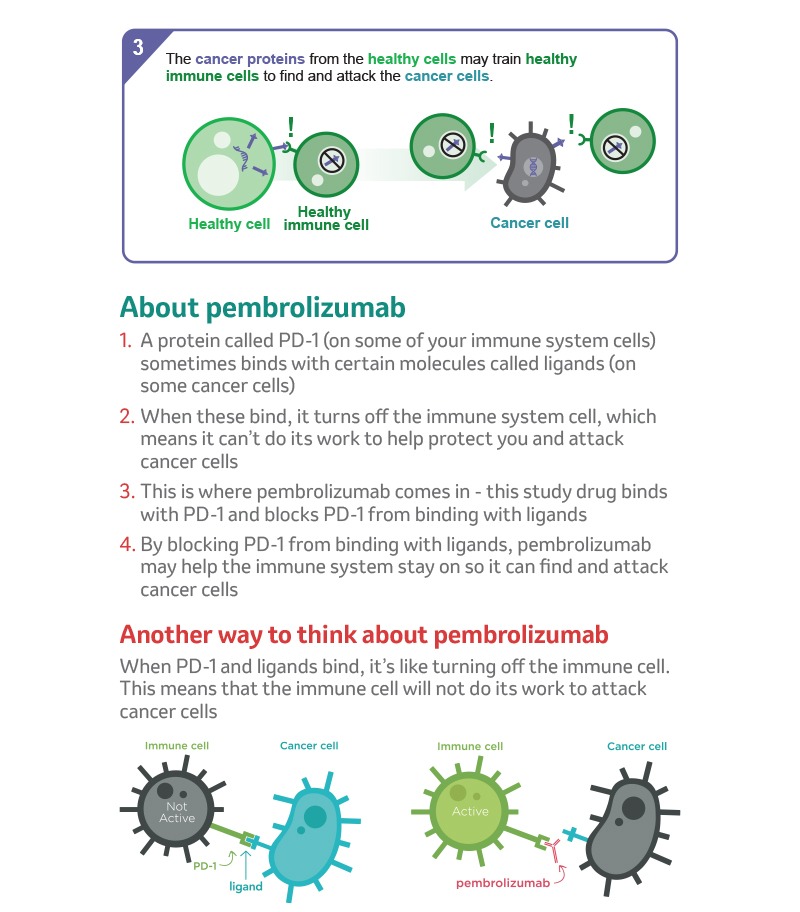
In this clinical trial, V940 is used in combination with pembrolizumab (anti PD-1 immunotherapy). PD-1 is an immune checkpoint protein that plays a crucial role in regulating immune responses. PD-1 is a protein found on the surface of activated T cells and other immune cells. It acts as a “brake” on the immune system, preventing it from attacking healthy cells. Anti-PD-1 antibodies (pembrolizumab) bind to PD-1 on T cells. This blockade releases the brakes on the immune system, allowing T cells to more effectively recognize and destroy cancer.
Getting Started
For those who believe they may be a candidate, the first step is to contact Dr. Susan Johnson, Director of Research. She will determine if individual may be a candidate. After informed consent, participants will undergo screening for eligibility into the clinical trial.
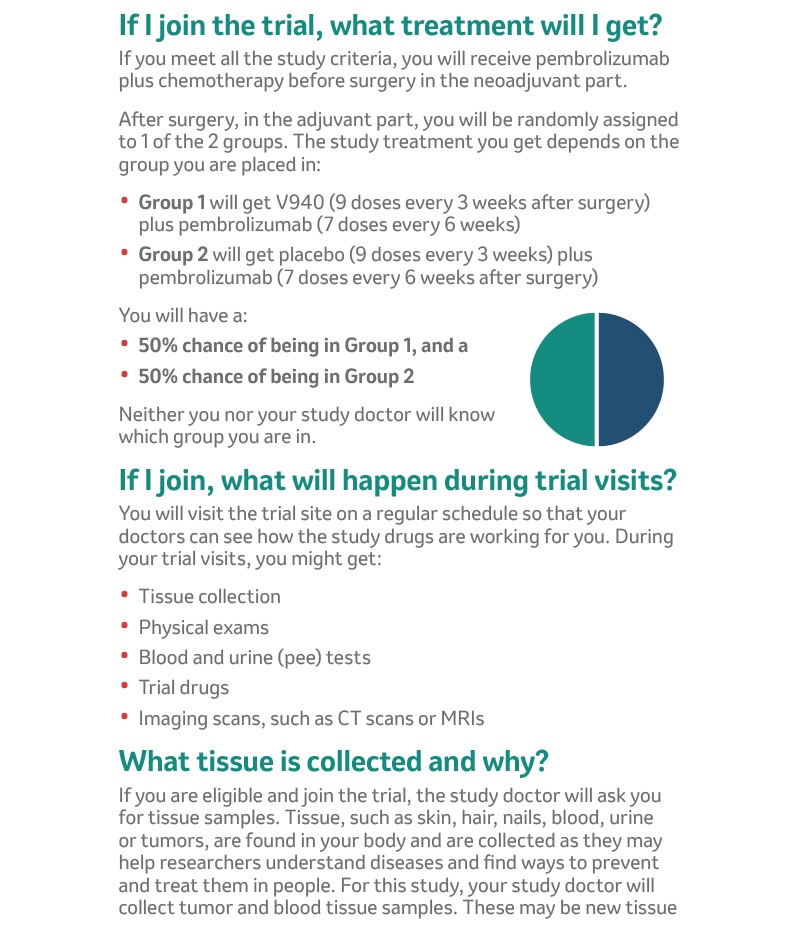
If an individual is accepted into the study, neoadjuvant treatment is administered prior to surgery. The resected tissue is evaluated to determine the response to neoadjuvant therapy. If it is determined that the patient will benefit from adjuvant therapy, the participant will receive pembrolizumab and randomized to receive the investigational agent V940 or placebo during adjuvant therapy. Participants are carefully monitored throughout therapy to identify any adverse reactions and efficacy of treatment.
For more information on this, or other clinical trials, please contact: Dr. Susan Johnson, Director of Research sjohnson@echoct.com or 860-886-8362.
Learn More about this NSCLC & this Clinical Trial
The INTerpath 009 study for early-stage non-small cell lung cancer (NSCLC) is trying to determine if an investigational study drug combination, when given after initial treatment and surgery, may work to help keep NSCLC from coming back or going to other areas of the body.