
Leading the Way in Innovation: Understanding Bispecific Antibodies
Advances in medicine continue to transform the way diseases are treated. That is why ECHO is proud to be at the forefront of care, offering the newest treatment options in a safe and carefully monitored outpatient setting. One of these treatment options is the use of bispecific antibody therapy known as BiTE Therapy.

What Are Bispecific Antibodies?
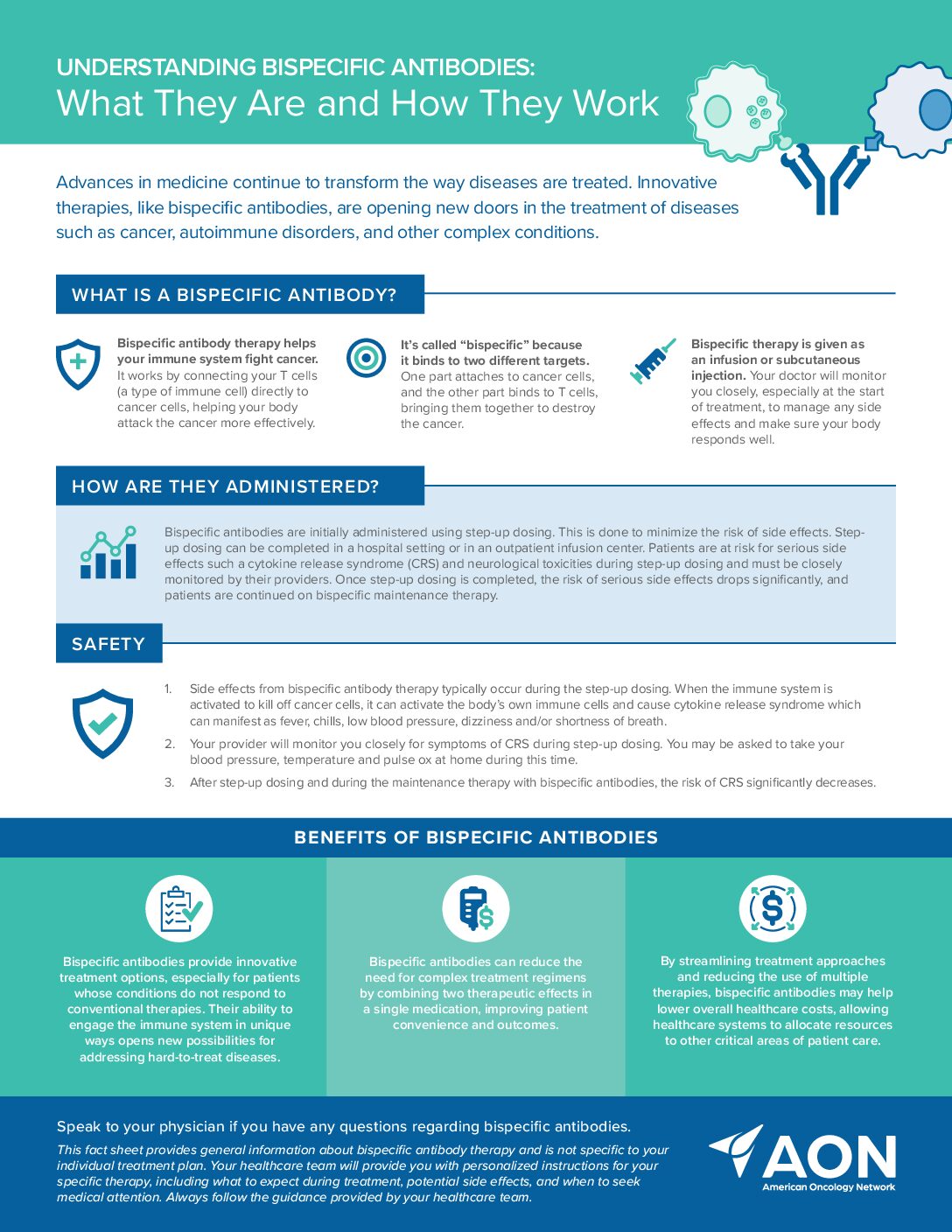
Bispecific antibodies (often called BsAbs) are a newer type of treatment being developed for cancer and some immune-based diseases. They are engineered proteins designed to bind to two different targets at the same time—something regular (monospecific) antibodies cannot do. Think of them like a bridge: They bring two important cells or molecules together so your immune system can better recognize and attack disease.
How Do They Work?
A bispecific antibody has two “arms,” each recognizing a different target:
1. One arm binds to the cancer cell
It attaches to a protein on the tumor—like “grabbing” the cancer.
2. The other arm binds to an immune cell (usually a T-cell)
This allows the immune system’s strongest fighters to come close to the cancer.
Once both are connected, the T-cell can attack and kill the cancer cell more effectively.
Some bispecific antibodies also have roles in:
- blocking two disease-driving pathways at once
- enhancing immune signaling
- delivering toxic molecules directly into cancer cells
What Conditions Are They Used For?
Bispecific antibodies are being used or studied for several diseases, most commonly:
Blood cancers
- B-cell leukemia and lymphoma
(examples: bispecifics targeting CD19, CD20, or BCMA) - Multiple myeloma
Many FDA-approved or late-stage bispecifics fall into this category.
Solid tumors
Still earlier in development, but research includes:
- lung cancer
- prostate cancer
- gastrointestinal cancers
- melanoma
Autoimmune or inflammatory conditions
A few bispecifics can block two inflammatory signals at once to calm the immune system.
How Are Bispecific Antibodies Given?
The method depends on the specific drug:
- IV infusion (most common)
- Subcutaneous injection (increasingly popular because it’s easier and safer)
- Some are given weekly, others monthly, or in cycles.
Because bispecifics activate the immune system, patients usually start treatment in a monitored setting.
What Are the Potential Benefits?
1. More precise cancer targeting
Bispecific antibodies lock the immune system directly onto the cancer cell.
2. Less need for chemotherapy
Some bispecifics work without traditional chemotherapy, offering a more targeted approach.
3. Effective after other treatments fail
They are often helpful when:
- chemotherapy,
- CAR-T therapy,
- or other targeted drugs stop working.
4. Can be combined with other therapies
Doctors may pair bispecifics with:
- immunotherapy
- targeted therapy
- low-dose chemotherapy
for greater effectiveness.
Possible Side Effects
Because bispecifics activate the immune system, side effects often resemble those from immunotherapy.
Common side effects include:
- Cytokine release syndrome (CRS)
fever, chills, low blood pressure
(usually mild and treatable) - Neurologic symptoms
headache, confusion, tremor - Low blood counts
anemia, low platelets, infection risk - Fatigue
- Injection-site reactions (if given subcutaneously)
Doctors monitor closely—especially during the first few treatments.
Who Might Be a Candidate?
A patient might be considered for a bispecific antibody if:
- they have a cancer known to respond to bispecifics
(like multiple myeloma or B-cell lymphoma) - other treatments are no longer effective
- they cannot receive CAR-T therapy
- they are medically stable enough for immunotherapy
Many bispecifics are available only in specialized cancer centers or clinical trials. ECHO is proud to among these leaders in innovation.
A Promising Future
Bispecific antibodies represent one of the most promising new advances in cancer treatment. By connecting the immune system to cancer cells in a highly targeted way, they offer new hope—especially to patients whose cancers have returned or stopped responding to standard therapies.
Although they can cause immune-related side effects, they are often manageable, and ongoing research is rapidly expanding their use to more diseases.
Below is some additional information to learn more.