

Early diagnosis, latest advancements mean the best outcomes for breast cancer
Below is an article recently published by CT Insider on October 21, 2025.
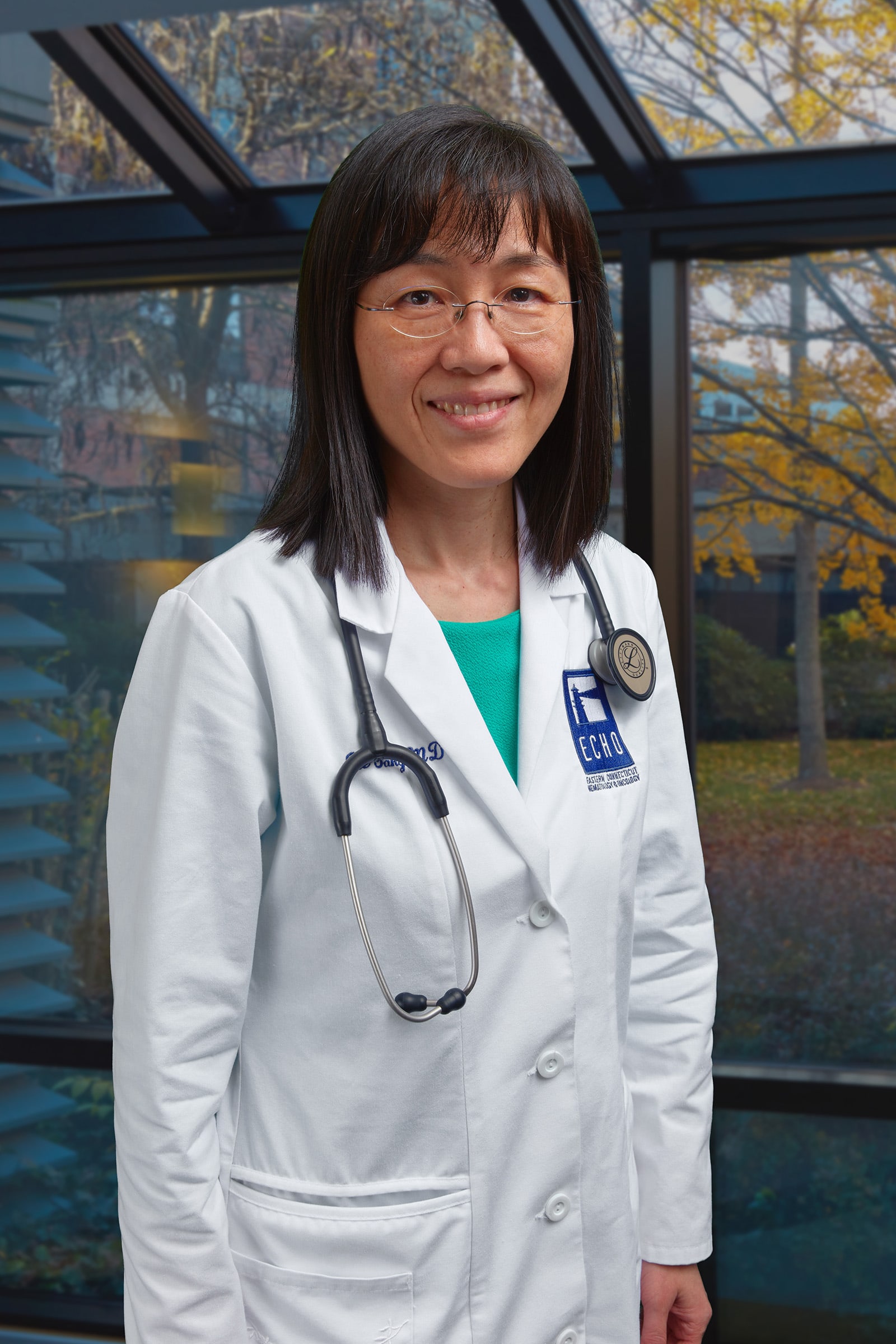
Dr. Yang discusses how diagnosis and treatments for breast cancer are becoming more and more effective every year.
Types of breast cancer
Dr. Yang said the most common types of breast cancer are hormone-positive, HER2-negative, and HR-Positive HER2-Negative.
Hormone-positive and HER2-negative are usually the less aggressive forms of cancer and often can be treated with hormone therapy, while the remaining form usually requires chemotherapy.
Advancements in treatment mean even those who have been diagnosed with metastatic breast cancer, which is cancer that has spread to other areas, can live longer lives.
Dr. Yang said she is optimistic because, due to the treatment advancements, she is seeing fewer cases of metastatic breast cancer.
Eastern Connecticut Hematology and Oncology is on the cutting edge of advanced cancer treatments, participating in ongoing trials. In fact, one of the biggest advancements in breast cancer treatment, HER2 therapy.
While ECHO is giving its patients the highest level of care, it is constantly running research studies and watching care evolve. Many of the research trials, like HER2, have now become the standard of care.
“HER2 has saved many women’s lives,” she said.
The ECHO difference
The ECHO staff helps patients navigate through their breast cancer journey from diagnosis through recovery. A nurse navigator educates patients about medications, side effects, and what to expect during treatment. A social worker and mental health professional provide ongoing support on topics such as navigating insurance and the emotional impact of a cancer diagnosis. A nutritionist helps patients maintain a nutritional diet and a healthy weight during and after treatment.
The ECHO Cancer Foundation is unique non-profit organization that supports patients and caregivers. The Foundation provides support services, education, and generous financial assistance to help with rides, groceries or rent. Click here to learn about the ECHO Cancer Foundation.
Screening recommendations
Dr. Yang said that current mammogram recommendations go by age.
“For the general population who are not considered high risk, you should start getting a mammogram at age 40, every other year. Then, at age 50, every year, she said.
Those who are high risk, who have breast cancer in their family, should begin getting tested 10 years before the relative was first diagnosed.

“So, if your mother was diagnosed at 48, you should start getting mammograms twice a year at 38,” she said. Those at higher risk should also be getting an MRI in addition to a mammogram, she said.
Genetic testing can also be used to help determine the risk of certain cancers, and especially breast cancer.
Some who are considered high risk can be prescribed a pill to lower their risk.
To learn more about ECHO’s Genetic Risk Assessment Program, click here.
Optimistic for the future
Dr. Yang said it is important to remember that everyone should be motivated to get their regular mammograms because breast cancer is “highly curable.”
She also said that her patients and the staff at ECHO are inspirational.
“So many of our patients go through this tough treatment, with the support of their families, and our wonderful staff, and come back even better than before,” she said.